What Is Vibrational Healing and How Does It Work
By Reverend Michael Allison · October 5, 2026
Topics: Energy Healing

You scroll past a flyer for a sound bath, or a friend mentions vibrational healing over coffee, and the phrase sits there unexplained. It sounds either completely obvious or completely made up, depending on the kind of day you are having.
So here is a plain answer, with no mystique and no pressure to believe anything in advance. You can read this and then decide whether the experience is worth an hour of your time.
What Is Vibrational Healing?
Vibrational healing is an umbrella term for practices that work with sound, frequency, color, and subtle energy rather than physical manipulation of muscle and joint. Sound baths, Reiki, tuning forks, crystals, color work, and flower essences all sit under that umbrella. A practitioner introduces something steady and organized, and your own system settles toward that steadiness over the course of a session. People describe warmth in the hands, heaviness in the legs, or sudden yawning afterward, and vibrational healing is not a replacement for care from your doctor.
Vibrational healing is an umbrella term. It covers practices that work with sound, frequency, color, and subtle energy rather than physical manipulation of muscle and joint.
Sound baths sit under that umbrella. So do Reiki, tuning forks, crystals, color work, and flower essences.
The common thread is simple enough to say in one sentence. A practitioner introduces something steady and organized, and your own system settles toward that steadiness over the course of a session.
In most of these sessions, nobody presses hard on your body. You lie down, you breathe, and you let something consistent happen around you and through you.
The Simple Idea Underneath the Word
Everything moves. Atoms move, your heart keeps a rhythm, your breath has a pace, and sound is literally vibration that your chest and bones register before your mind names it.
Musicians know a related idea called resonance. Strike one tuning fork near a second fork tuned to the same note, and the second one begins to hum on its own.
Older clockmakers noticed something similar. Pendulum clocks hung on the same wall gradually swing together, because a shared surface carries their small pulses back and forth.
Vibrational practices borrow that observation and apply it to a person. A long, even tone or a pair of warm hands offers your nervous system something slow and regular to move toward.
The Forms You Are Most Likely to Encounter
The category is broad, so it helps to see the usual members side by side. Most studios in any given town offer at least two or three of these.
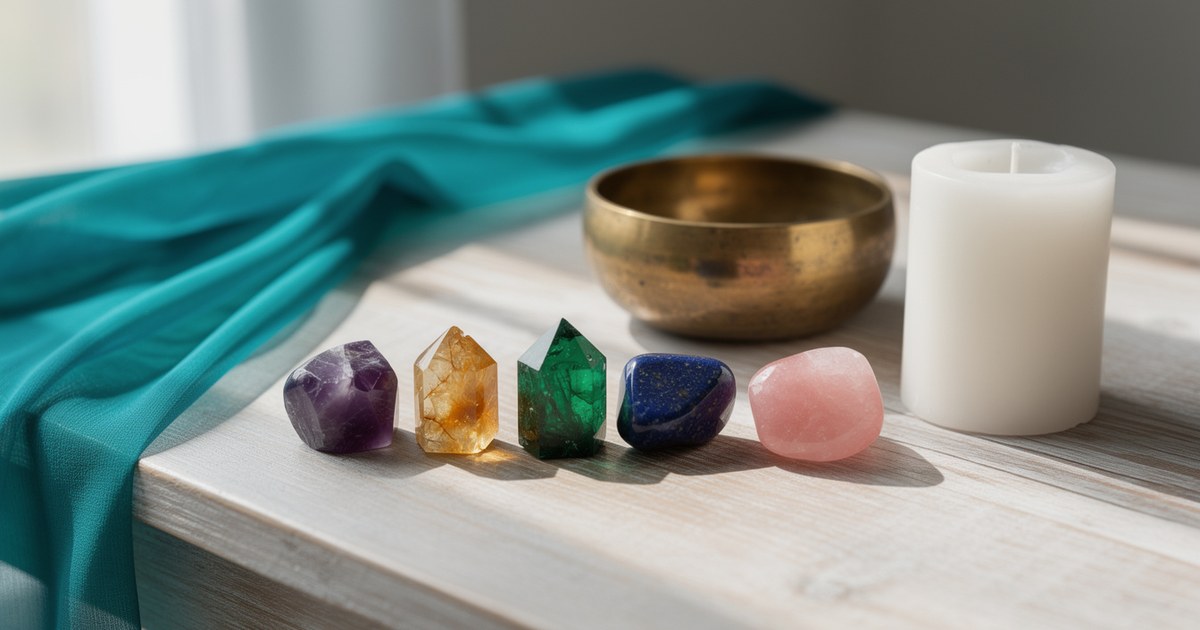
- Sound baths. Crystal or metal singing bowls, gongs, and chimes fill a room with sustained tone while you rest on a mat with your eyes closed.
- Reiki. A practitioner places hands lightly on or just above the body, offering steady energy while you stay fully clothed and still.
- Tuning forks. Weighted forks rest on bone or hover near the body, so you feel a single pitch as physical buzz rather than as sound alone.
- Flower essences. Water based preparations made from blossoms carry the energetic imprint of a plant instead of its scent or its chemistry.
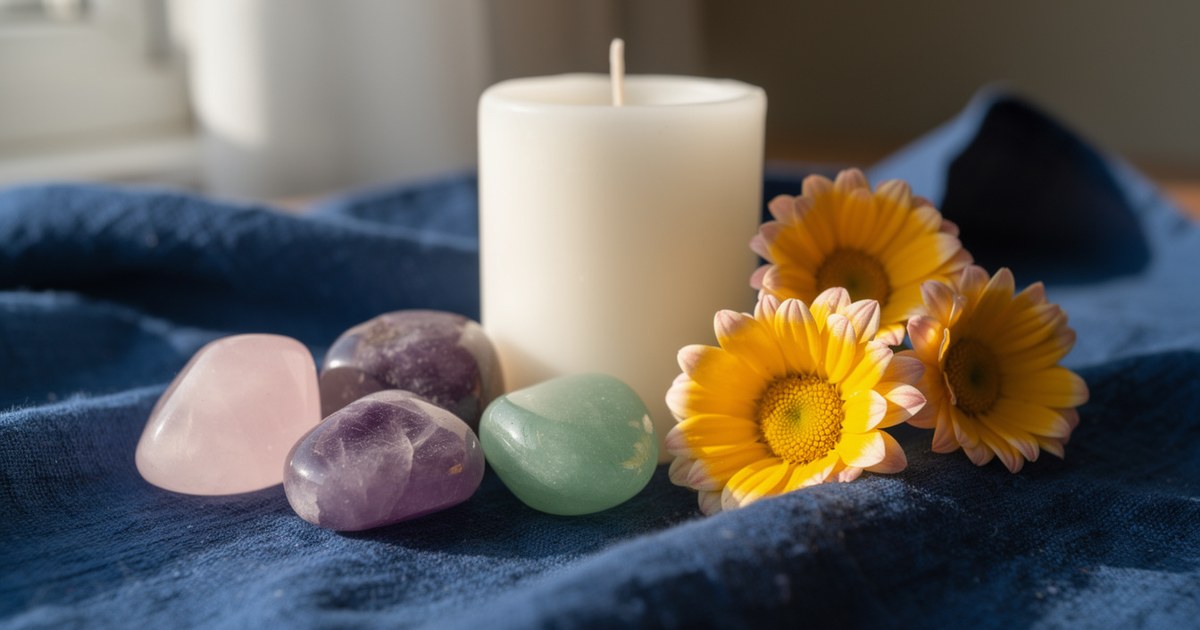
- Crystals and color. Stones and colored light get placed around the body, working with the idea that different frequencies carry different qualities.
- Chakra work. Attention moves through the body's classic energy centers, one at a time, often paired with breath, sound, or hands on presence.
What a Session Is Really Like
Expect something quieter and less dramatic than the internet suggests. You arrive, you talk for a few minutes about what has been heavy lately, and then you lie down.
Sound builds slowly in a sound bath, and your thoughts keep wandering for the first ten minutes or so. That wandering is normal, and no one expects you to stop it by force.
People describe a range of sensations afterward. Warmth in the hands, heaviness in the legs, sudden yawning, watery eyes, or the pleasant blur of almost falling asleep all come up often.
Some people feel very little the first time and more the third time. Both experiences are common, and neither one means you are doing the practice wrong.
What Vibrational Healing Is Not
It is not a replacement for care from your doctor or any other licensed provider. Honest practitioners say so plainly, and they will never ask you to stop working with your physician.
It is also not a personality test or a performance. You do not need special sensitivity, a history of meditation, or any particular belief system to lie on a mat and listen.
Be careful with anyone who promises specific outcomes or pressures you into a long package on your first visit. Steady, honest teachers describe the experience and then let you choose freely.
How to Try It This Week Without Spending Much
You can test the basic idea at home before you ever book anything. These small experiments cost nothing and take under ten minutes each.
- Hum on a long exhale for two full minutes and notice where the buzz lands in your face and chest.
- Put on a single sustained tone recording, lie on the floor, and let your attention rest on the sound instead of your thoughts.
- Rub your palms together briskly, then hold them an inch apart and pay attention to warmth, tingling, or pressure between them.
- Sit with one hand on your heart and one on your belly, and match your breath to a slow, even count.
- Search for a community sound bath nearby and go once, with no expectation about how it should feel.
How to Choose a Practitioner or a Class
Ask where the person trained and who taught them. In Reiki, teachers can name their lineage back through the Usui tradition, and a good one shares that history gladly.
Ask what happens in a session, start to finish. Clear, specific answers about the room, the length, and the touch involved tell you more than any list of credentials.
Then trust your own read on the conversation. Warmth, patience, and an easy willingness to answer questions matter far more than a polished website.
If one visit leaves you curious rather than satisfied, that curiosity is worth following. Many people who start with a single sound bath end up learning to work with energy themselves.
Related Reading
Related reading on the forms vibrational work takes:
- Crystal Singing Bowl Sound Baths and Your Reiki Practice
- What Is Distance Energy Healing and How Does It Actually Work
- Energy Healing and Massage Therapy: How They Differ and When to Book Each
Frequently Asked Questions
Is vibrational healing scientific?
Researchers have studied slow breathing, music, and relaxation responses fairly well, and those pieces overlap with what happens in a session. The energetic explanations sit outside current measurement, and honest practitioners say that openly rather than dressing it up.
Do I have to believe in it for anything to happen?
No. Most people arrive skeptical, and lying still in a dim room while long tones fill the air affects the body whether or not you are convinced.
How often should I go?
Try three sessions over a month or two before you judge the practice. Once a month suits most people after that, though some prefer a weekly rhythm during busy seasons.
Can vibrational work happen at a distance?
Practitioners in many traditions send energy across distance, and Reiki has taught a formal method for it since the early twentieth century. Clients usually rest at home at the agreed time and share what they noticed afterward.
Curious what a session feels like?
Rev. Michael offers energy sessions and regular sound baths around Metro Detroit for people at every level of experience. Come once and see what you notice.
Our Healing Services See Upcoming Events